Digital Piano Comparison Chart 2026: 12 Popular Models Compared
By FindKeyboard.com · Updated 2026-11-02
This chart puts 12 of the most cross-shopped 88-key digital pianos from Yamaha, Roland, Casio, Kawai and Korg side by side: key action, polyphony, speaker power, Bluetooth, weight and a rough price band. Every spec comes from the manufacturer's own spec page, manual or catalog (sources at the bottom). Where we could not confirm a number, we left it out rather than guess.
Short version: under about $550, the Yamaha P-145, Roland FP-10, Casio PX-S1100, Casio CDP-S110 and Korg B2 all give you 88 weighted keys, and they differ mainly in polyphony, Bluetooth and outputs. Spending more mostly buys more polyphony, stronger speakers, proper line outputs and, at the top, wooden or hybrid keys and three pedals.

Yamaha P-145
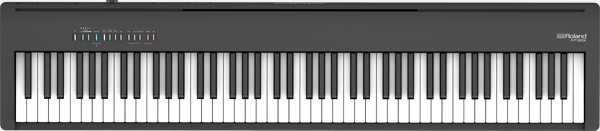
Roland FP-30X

Casio PX-S1100
The Digital Piano Comparison Chart
Sorted by price band, cheapest first. On a phone, swipe the table sideways to see every column.
| Model | Key action | Keys | Weighted | Polyphony | Speakers (amp) | Bluetooth | Weight | Price band | Best for |
|---|---|---|---|---|---|---|---|---|---|
| Yamaha P-145 | GHC (Graded Hammer Compact) | 88 | Yes | 64 | 7 W × 2 | None (P-145BT: audio) | 11.1 kg | Around $500 | Beginners who want Yamaha's simplest 88-key piano |
| Roland FP-10 | PHA-4 Standard (escapement) | 88 | Yes | 96 | 6 W × 2 | MIDI only* | 12.6 kg | Around $500 | Beginners who will use learning apps over Bluetooth |
| Casio PX-S1100 | Smart Scaled Hammer Action | 88 | Yes | 192 | 8 W × 2 | Audio + MIDI (included WU-BT10 adaptor) | 11.2 kg | Around $500 | Small rooms; slimmest body here, runs on batteries |
| Casio CDP-S110 | Scaled Hammer Action II | 88 | Yes | 64 | 8 W × 2 | None | 10.5 kg | $400–$500 | Tightest budget; lightest piano in this chart |
| Korg B2 | NH (Natural Weighted Hammer) | 88 | Yes | 120 | 15 W × 2 | None | 11.4 kg | Around $500 | Budget buyers who play through the speakers |
| Yamaha P-225 | GHC (Graded Hammer Compact) | 88 | Yes | 192 | 7 W × 2 | Audio only (varies by country) | 11.5 kg | $550–$800 | P-145 buyers who need AUX OUT, a recorder and more polyphony |
| Roland FP-30X | PHA-4 Standard (escapement) | 88 | Yes | 256 | 11 W × 2 | Audio + MIDI | 14.8 kg | $550–$800 | Home players who also gig small rooms (line outs, 2 headphone jacks) |
| Yamaha DGX-670 | GHS (Graded Hammer Standard) | 88 | Yes | 256 | 6 W × 2 | Audio only (varies by country) | 21.4 kg | $800–$1,200 | Players who want 263 accompaniment styles plus weighted keys |
| Kawai ES120 | RHC (Responsive Hammer Compact) | 88 | Yes | 192 | 10 W × 2 | Audio + MIDI (varies by market) | 12.5 kg | $800–$1,200 | Portable buyers who want Kawai's concert grand samples |
| Casio PX-870 | Tri-sensor Scaled Hammer Action II | 88 | Yes | 256 | 20 W × 2 | None | 34.3 kg | $800–$1,200 | Home cabinet with 3 pedals on a mid budget |
| Yamaha YDP-165 | GH3 (Graded Hammer 3) | 88 | Yes | 192 | 20 W × 2 | None | 42.0 kg | $1,200+ | Students who want a Yamaha cabinet piano with 3 pedals |
| Roland FP-90X | PHA-50 (wood/plastic hybrid) | 88 | Yes | Unlimited (piano) / 256 | 25 W × 2 + 5 W × 2 | Audio + MIDI | 23.6 kg | $1,200+ | Advanced players and gigs; mic input and MIDI ports |
*Roland notes that the FP-10's Bluetooth may not be included depending on the country of purchase. Weights are the piano alone (FP-30X with music rest); cabinet models (PX-870, YDP-165) include their stand and pedals. Price bands are rough US street prices at the time of writing and move a lot around sales such as Black Friday; use the Amazon links below for the live price. All 12 have 88 full-size weighted keys and a sustain pedal input.
Twelve rows is a lot to weigh. Tell our digital piano finder quiz your budget, room and goals in 3 quick questions, and it narrows this chart down to the models that fit you.
How to Read the Chart
Key action
The action is the mechanism under the keys, and each brand gives theirs a name: Yamaha GHC, GHS and GH3, Roland PHA-4 and PHA-50, Casio Scaled Hammer Action, Kawai RHC, Korg NH. All 12 in this chart are weighted hammer actions, and most of the makers describe them as graded or scaled, meaning heavier in the bass and lighter in the treble like an acoustic piano. Roland lists escapement on PHA-4 and PHA-50. The PHA-50 uses wood and plastic hybrid keys, which none of the cheaper models here have. Feel is personal, so if you can, try the actions in a store; if you can't, our Yamaha P-145 vs Roland FP-10 comparison goes deeper on the two best-known entry actions.
Polyphony
Polyphony is how many notes the piano can sound at once. Held notes, notes ringing under the sustain pedal and layered sounds all count, so the number runs out faster than you'd expect. Casio's own CDP-S110 manual says notes are cut off once you exceed its 64-note maximum (32 for some tones). 64 is usually fine for early beginner pieces; 128 to 256 gives far more headroom for pedal-heavy music and layers. Roland lists the FP-90X's piano tones as having no polyphony limit when played solo.
Speakers
The chart lists amplifier power per side as the makers state it. More watts means more headroom before the sound strains, which matters if you play through the speakers in a bigger room, but watts alone don't tell you how a piano sounds. If you mostly practise on headphones, this column matters least.
Bluetooth: audio vs MIDI
These are two different features. Bluetooth audio streams music from your phone through the piano's speakers so you can play along. Bluetooth MIDI sends what you play to an app (for lessons, notation or recording) without a cable. The FP-10 has MIDI only, the P-225 and DGX-670 have audio only, and the FP-30X, FP-90X, ES120 and PX-S1100 (through its included adaptor) have both. Every model here can still connect to apps by USB.
Weight and size
Portable "slab" pianos in this chart weigh about 10.5–15 kg; the FP-90X and DGX-670 are about 21–24 kg; the cabinet pianos are 34–42 kg because the stand and three pedals are built in. Not sure you need all 88 keys? See 61 vs 76 vs 88 keys.
Picks by Situation
These picks follow from the specs in the chart, not from hands-on testing. We have not played these pianos side by side ourselves. If none of these situations sounds like yours, let the piano quiz match a model to your room and budget.
Beginner, home practice
Yamaha P-145 or Roland FP-10. Both are around $500 with 88 graded hammer-action keys and a footswitch in the box. The FP-10 has more polyphony (96 vs 64) and Bluetooth MIDI for learning apps; the P-145 is slightly lighter. On Amazon US the Yamaha is listed as the P-145BT, which adds Bluetooth audio. Our best digital pianos for beginners guide covers these in more depth.
Step up from entry level
Kawai ES120 or Roland FP-30X. If you expect to keep playing for years, these two add polyphony (192 and 256), more speaker power (10 W × 2 and 11 W × 2) and both Bluetooth audio and MIDI, while staying portable at 12.5 and 14.8 kg. The Yamaha P-225 is the Yamaha step up from the P-145.
Small apartment
Casio PX-S1100. Casio lists it at 232 mm deep and 11.2 kg, it can run on six AA batteries, and it has two headphone jacks, so a teacher or parent can listen in quietly. The Casio CDP-S110 has the same 232 mm depth and is even lighter (10.5 kg), with 64-note polyphony and no Bluetooth.
Gigging, church or school hall
Look for dedicated line outputs so you can feed an amp or PA. Roland FP-30X has Output (L/Mono, R) jacks, 256-note polyphony and 11 W × 2 speakers at 14.8 kg. The Yamaha P-225 has AUX OUT and is lighter (11.5 kg). The Roland FP-90X adds a mic input, MIDI ports and the strongest speakers here. By contrast, the P-145, FP-10, CDP-S110 and Korg B2 send sound out through their headphone jack. More in our Yamaha P-145 vs P-225 comparison and best digital piano for church guide.
Tightest budget
Korg B2 or Casio CDP-S110. Both still give you 88 weighted keys. On paper the B2 has more polyphony (120 vs 64) and stronger speakers (15 W × 2 vs 8 W × 2); the CDP-S110 is lighter and can run on batteries. Neither has Bluetooth. If your budget can stretch a little, the FP-10's 96-note polyphony and Bluetooth MIDI are the next step up.
Home furniture piano
Casio PX-870 or Yamaha YDP-165. Both come with a cabinet stand, three pedals (damper, soft, sostenuto) and 20 W × 2 speakers. The PX-870 has more polyphony (256 vs 192); the YDP-165 uses Yamaha's GH3 action with synthetic ebony and ivory keytops. Want rhythms and backing bands instead? The Yamaha DGX-670 combines GHS weighted keys with 263 accompaniment styles.
When to Skip the Chart and Take the Quiz
A chart is great when you already know what matters to you. It is less helpful if you are torn between two rows, buying for a child or a partner, or not sure whether you even need weighted keys. In that case, answer 3 questions and get a personalized piano match: you can describe your situation in your own words (for example "beginner, small flat, mostly headphones, under $600") and get models with the reason each one fits.
Already down to two Yamahas? Read P-145 vs P-225. Comparing the P-225 with Roland and Kawai? See our P-225 vs FP-30X vs ES120 comparison.
Frequently Asked Questions
Which digital piano in this chart has the most polyphony?
The Roland FP-90X, which Roland lists as unlimited for its piano tones played solo (256 for other sounds). The FP-30X, DGX-670 and PX-870 list 256.
Which models have both Bluetooth audio and Bluetooth MIDI?
The Roland FP-30X and FP-90X, the Kawai ES120 (depending on market) and the Casio PX-S1100 with its included WU-BT10 adaptor. The FP-10 has Bluetooth MIDI only; the P-225 and DGX-670 have Bluetooth audio only.
Does the Yamaha P-145 have Bluetooth?
No. The P-145BT is the same piano with Bluetooth audio added. Neither has Bluetooth MIDI built in.
What is the lightest 88-key digital piano in this chart?
The Casio CDP-S110 at 10.5 kg, followed by the Yamaha P-145 (11.1 kg) and Casio PX-S1100 (11.2 kg).
How We Compared
We have not played these pianos side by side ourselves. Every spec in the chart comes from the manufacturer: Yamaha's P-145, P-225, DGX-670 and YDP-165 spec pages; Roland's FP-10, FP-30X and FP-90X spec pages; Casio's piano catalog (PX-S1100), CDP-S110 user's guide and Casio's distributor spec sheets for the PX-S1100 and PX-870; Kawai's ES120 owner's manual; and Korg's B2 spec page. Features marked "varies by country" or "market" are the makers' own wording, so check the listing for your region before you buy.
Not sure which is right for you?
FindKeyboard asks you a few questions and gives you a personalized recommendation in seconds.
Find My Keyboard →This post contains affiliate links. If you purchase through our links, we may earn a small commission at no extra cost to you. As an Amazon Associate I earn from qualifying purchases.