Yamaha P-145 vs Roland FP-10: Which Digital Piano to Buy?
By FindKeyboard.com · Updated 2026-10-21
If you're choosing a beginner digital piano around $500, the Yamaha P-145 vs Roland FP-10 is the comparison that matters in 2026. Both are 88-key weighted digital pianos with speakers. They feel and sound different. The Yamaha P-45 is discontinued — do not buy one new. The P-145 is the current Yamaha. For the broader shortlist see best digital piano for beginners.

Yamaha P-145
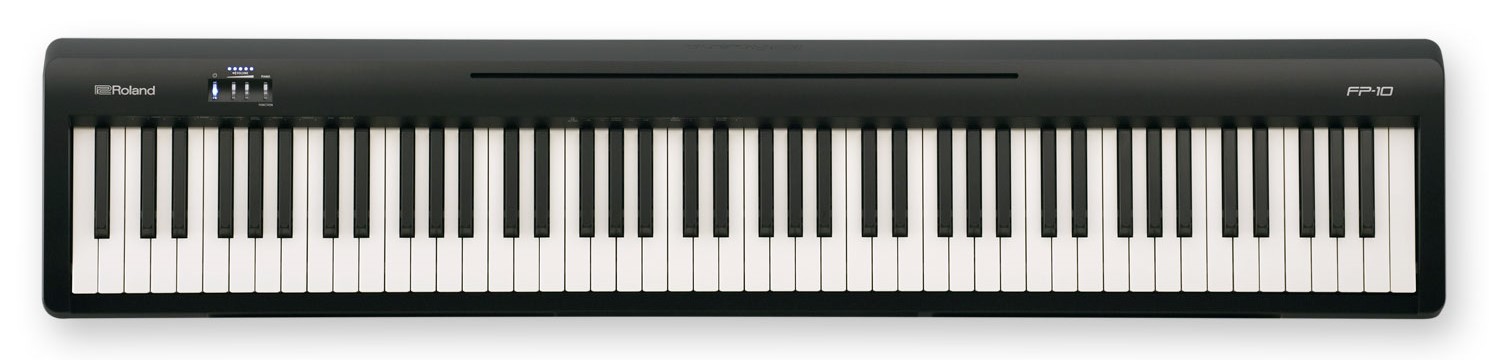
Roland FP-10
Quick Comparison
| Feature | Yamaha P-145 | Roland FP-10 |
|---|---|---|
| Keys | 88, weighted | 88, weighted |
| Key action | GHC (Graded Hammer Compact) | PHA-4 Standard + escapement |
| Polyphony | 64 notes | 96 notes |
| Voices | 10 | 15 |
| Sound engine | AWM Stereo Sampling | SuperNATURAL |
| Bluetooth MIDI | No (P-145BT adds audio, not MIDI) | Yes |
| Weight | ~11.1 kg | 12.6 kg |
| Street price | ~$500–$580 | ~$450–$500 |
Still not sure which one fits you? Answer 3 quick questions in our digital piano finder quiz and get a personalized recommendation.
Sound
Yamaha uses their AWM Stereo Sampling engine on the P-145, giving you 10 built-in voices. The grand piano sound is warm and familiar — it's what most people picture when they think "digital piano."
Roland's FP-10 uses the SuperNATURAL Piano sound engine, with 15 voices. The sound is brighter and more detailed, with better resonance when you hold the sustain pedal.
Feel
This is where the FP-10 pulls clearly ahead, same as it did against the P-45.
Roland's PHA-4 Standard keybed has escapement simulation — a subtle mechanical feature that mimics the feel of an acoustic piano at the point where the hammer releases. It makes slow, controlled playing feel noticeably more natural.
Yamaha's GHC action on the P-145 is graded (heavier in the low end, lighter in the high end) and quieter than the old GHS on the P-45, but doesn't include escapement at this price.
Polyphony
Yamaha P-145: 64 notes. Enough for most beginners, but if you use the sustain pedal heavily, you may occasionally hear notes cutting out.
Roland FP-10: 96 notes. More headroom, and you're unlikely to hit the ceiling in normal playing.
Connectivity
Yamaha P-145
- ✓ USB to Host (MIDI + audio)
- ✓ Headphone jack (6.35mm)
- ✓ Sustain pedal input
- ✗ No Bluetooth (P-145BT adds audio, not MIDI)
Roland FP-10
- ✓ USB to Host
- ✓ Headphone jack (3.5mm)
- ✓ Sustain pedal input
- ✓ Bluetooth MIDI
Yamaha vs Roland Digital Pianos: How the Two Brands Differ
The P-145 vs FP-10 choice is really a small version of a bigger question: Yamaha or Roland? Both brands build their whole digital piano range from a few shared parts — a key action, a piano sound engine and an app — so knowing how those differ helps whichever price you shop at. We have not played these pianos side by side ourselves. The specs below come from Yamaha's and Roland's own product pages, and the "feel and sound" notes are traits players commonly report, not our test results.
Key actions
| Brand | Action | Where you find it |
|---|---|---|
| Yamaha | GHS (Graded Hammer Standard) | Older P-series (P-45, P-121, P-125a) |
| Yamaha | GHC (Graded Hammer Compact) | Current P-143, P-145, P-225 |
| Yamaha | GH3 (Graded Hammer 3) | Arius console pianos such as the YDP-165 |
| Roland | PHA-4 Standard (escapement, ivory feel) | FP-10, FP-30X and FP-60X |
| Roland | PHA-50 (hybrid wood/plastic) | FP-90X flagship |
All of these are 88-key graded hammer actions: heavier in the bass, lighter in the treble. The practical difference at entry level is escapement. Roland includes it on every FP-X model starting with the FP-10. Yamaha's GHC on the P-145 and P-225 does not have it; in the P-series it arrives with the wooden NWX keyboard on the P-515. Yamaha's own goal for GHC is the same balanced, easy-to-play feel as the GHS it replaced, in a more compact keyboard. Players commonly describe Roland's PHA-4 as a little heavier and more "acoustic-like", and Yamaha's GHS/GHC as lighter and quicker to get comfortable on.
Sound engines
Yamaha samples its own concert grands. The P-145 uses AWM Stereo Sampling of the Yamaha CFIIIS concert grand, with damper resonance. One step up, the P-225 and Arius YDP-165 use the newer Yamaha CFX sample, and add key-off samples and Virtual Resonance Modeling (VRM Lite on the P-225).
Roland uses one sound engine across the range. The FP-10, FP-30X and FP-60X all run SuperNATURAL Piano, with string, damper and key-off resonance built in. The flagship FP-90X moves to PureAcoustic Piano Modeling. The biggest gaps between Roland models are polyphony and voices rather than the core piano tone: 96 notes and 15 panel tones on the FP-10, 256 notes and 56 panel tones on the FP-30X.
Players commonly describe Yamaha's piano as the familiar, focused "Yamaha grand" sound, and Roland's as fuller and more resonant with the sustain pedal down, which matches the sound notes above. Taste matters more than specs here, so listen to official demo videos of both through the same headphones before you buy.
Apps and connectivity
Yamaha: Smart Pianist. It controls the P-145 and P-225 from a phone or tablet and includes PDF scores of 303 classical pieces. You connect with a USB cable, or wirelessly with the optional UD-BT01 adaptor (iOS only). The P-225 adds Bluetooth audio for streaming music through its speakers (varies by country). Neither P-145 nor P-225 has built-in Bluetooth MIDI.
Roland: Roland Piano App. It replaced the older Piano Every Day app, which Roland no longer supports. The FP-10 and FP-30X both have built-in Bluetooth MIDI, so the app and third-party learning apps connect without cables. The FP-30X also adds Bluetooth audio. One caveat from Roland: the app's rhythm function does not work with the FP-10.
How the lineups line up
| Level | Yamaha | Roland |
|---|---|---|
| Entry | P-145: GHC, CFIIIS sample, 64 notes, no Bluetooth | FP-10: PHA-4 Standard, SuperNATURAL, 96 notes, Bluetooth MIDI |
| Step up | P-225: GHC, CFX sample, 192 notes, Bluetooth audio | FP-30X: PHA-4 Standard, SuperNATURAL, 256 notes, Bluetooth audio + MIDI |
| Weight (no stand) | P-145 11.1 kg · P-225 11.5 kg | FP-10 12.6 kg · FP-30X 14.8 kg (with music rest) |
Prices move often, so check the current price of each pair before deciding. For a closer look at the step-up pair, see our Yamaha P-225 vs Roland FP-30X comparison.
When to choose Yamaha, when to choose Roland
Choose Yamaha if…
- → You want the lightest, simplest piano to set up and move
- → You like the clear Yamaha grand sound (CFX from the P-225 up)
- → You'll record into a laptop over USB audio
- → You want Smart Pianist and its free classical scores
Choose Roland if…
- → Key feel comes first: escapement from the cheapest model up
- → You'll use learning apps wirelessly (Bluetooth MIDI built in)
- → You play pedal-heavy music and want more polyphony
- → You want one sound engine whichever model you can afford
Still torn between the brands? Answer three quick questions in our digital piano finder and it will suggest a model for your budget, space and goals.
Who Should Buy the Yamaha P-145?
If you already own one, the sustain pedal for the Yamaha P-145 is usually the footswitch that shipped in the box.
- →You want the current Yamaha, not leftover P-45 stock
- →You prefer Yamaha's warmer sound character
- →You will record into a laptop over USB
- →You found the P-145 on a real sale
Who Should Buy the Roland FP-10?
- →You want the best possible feel for the price
- →You plan to use a learning app via Bluetooth MIDI
- →You care about polyphony and sustain-heavy playing
- →You tried both and the Roland felt obviously better
Want to Step Up? Popular Alternatives
If your budget stretches a bit further, these two models are the natural next step:

Yamaha P-225
Current step above the P-145. Better speakers, more polyphony, and a more refined feel. Ignore old P-125 roundups.
View on Amazon →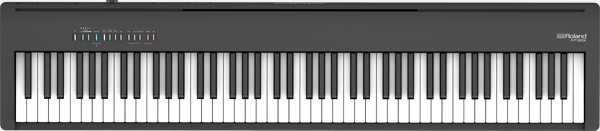
Roland FP-30X
Roland's most popular entry-level piano. Adds Bluetooth audio, better speakers, and more voices. A significant upgrade over the FP-10.
View on Amazon →The Verdict
If the prices are within about $50, buy the Roland FP-10 for the keys. Buy the Yamaha P-145 if you specifically want Yamaha, USB audio, or the slightly better onboard speakers.
Do not buy a new P-45. Leftover stock is only worth it if it is at least $80 cheaper than a new P-145. Still deciding 61 vs 88 keys? Beginners who want to learn piano should buy 88 weighted keys.
Frequently Asked Questions
Is the Roland FP-10 better than the Yamaha P-145?
For feel, yes. PHA-4 with escapement and 96-note polyphony beat GHC and 64 notes. For a simple Yamaha piano sound and USB recording, the P-145 is the easier instrument.
What is escapement on a digital piano?
Escapement is a mechanical feature of acoustic pianos where the hammer briefly releases before reaching the string. Digital pianos with escapement simulation recreate this tactile feel, making slow and controlled playing more natural — especially for classical technique.
Can the Yamaha P-145 connect to apps like Simply Piano?
Yes, via USB. The standard P-145 has no Bluetooth. The P-145BT adds Bluetooth audio, not MIDI. The Roland FP-10 connects wirelessly via Bluetooth MIDI, which is more convenient for learning apps.
Is the Yamaha P-45 discontinued?
Yes. Buy a Yamaha P-145 or a Roland FP-10. Leftover P-45 stock is only worth it if it is at least $80 cheaper than a new P-145. The next step up from the P-145 is the Yamaha P-225.
What is the next step up from the Roland FP-10?
The Roland FP-30X — adds Bluetooth audio (not just MIDI), better speakers, more voices, and higher polyphony, with the same PHA-4 Standard keybed.
Is Yamaha or Roland better for a digital piano?
Neither wins outright. Roland puts escapement and Bluetooth MIDI on its cheapest FP model; Yamaha is lighter, simpler and uses its own concert grand samples (CFX from the P-225 up). Pick Roland if key feel and wireless apps matter most, Yamaha if you prefer its sound and USB recording.
Not sure which is right for you?
FindKeyboard asks you a few questions and gives you a personalized recommendation in seconds.
Find My Keyboard →This post contains affiliate links. If you purchase through our links, we may earn a small commission at no extra cost to you. As an Amazon Associate I earn from qualifying purchases.