Digital Piano Accessories You Need in 2026: Pedal, Stand, Bench
By FindKeyboard.com · Updated July 2026 · 5 min read
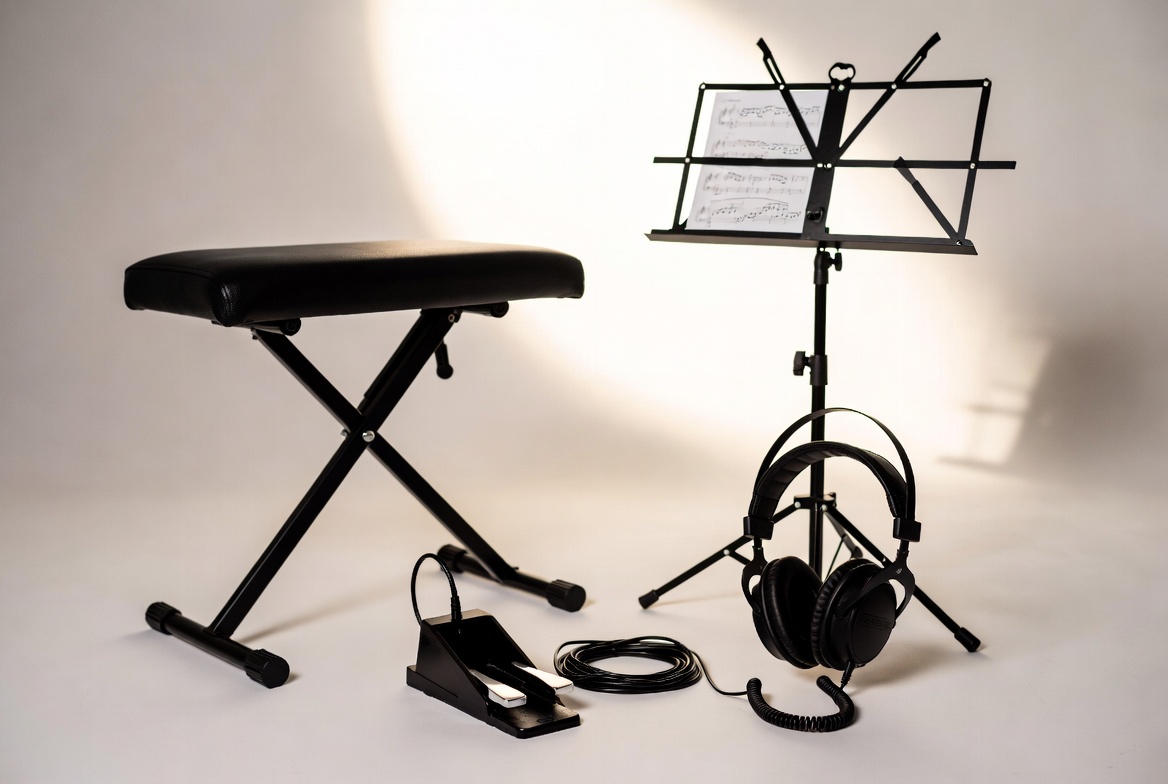
A digital piano or keyboard on its own isn't a complete setup. Four accessories — a sustain pedal, a stand, a bench, and a pair of headphones — turn a bare instrument into something you can actually sit down and practice on properly.
Whether you just found the right digital piano for home or for a church stage, these four picks round out any setup for well under $150 total — no guesswork, nothing you don't actually need.
Quick Answer
Every digital piano setup needs four things: a sustain pedal (~$20), a stand (~$30), a bench (~$40), and closed-back headphones (~$50) — about $140 total to go from a bare keyboard to a fully functional practice setup.
Why These 4 Accessories Matter
None of these are optional upgrades — they're the difference between a keyboard sitting on a table and an instrument you can actually practice on.
Sustain Pedal
Many keyboards and portable digital pianos ship with no pedal at all, or a flimsy footswitch not worth using. Some do include a usable one — the Yamaha P-145 is one, and its footswitch is fine for beginner practice (see the P-145 pedal guide). If yours came with nothing, a proper sustain pedal is required for anything beyond the most basic playing — legato phrasing, pedaling technique, and most piano repertoire assume one exists.
Keyboard Stand
Playing on a kitchen table or a flat surface puts your wrists at the wrong angle and your instrument at risk of getting knocked around. A proper stand sets your keyboard at the correct height and keeps it stable while you play.
Bench
Posture matters as much as key action. Sitting on a regular chair — too high, too low, no support — leads to bad habits and a sore back during long practice sessions. A dedicated bench keeps your seating height matched to the keyboard.
Headphones
Not everyone in the house wants to hear scales at 7 AM. Closed-back headphones let you practice silently, monitor your playing accurately, and use headphone-only features like layered sounds and metronomes without disturbing anyone.
The 4 Essential Accessories
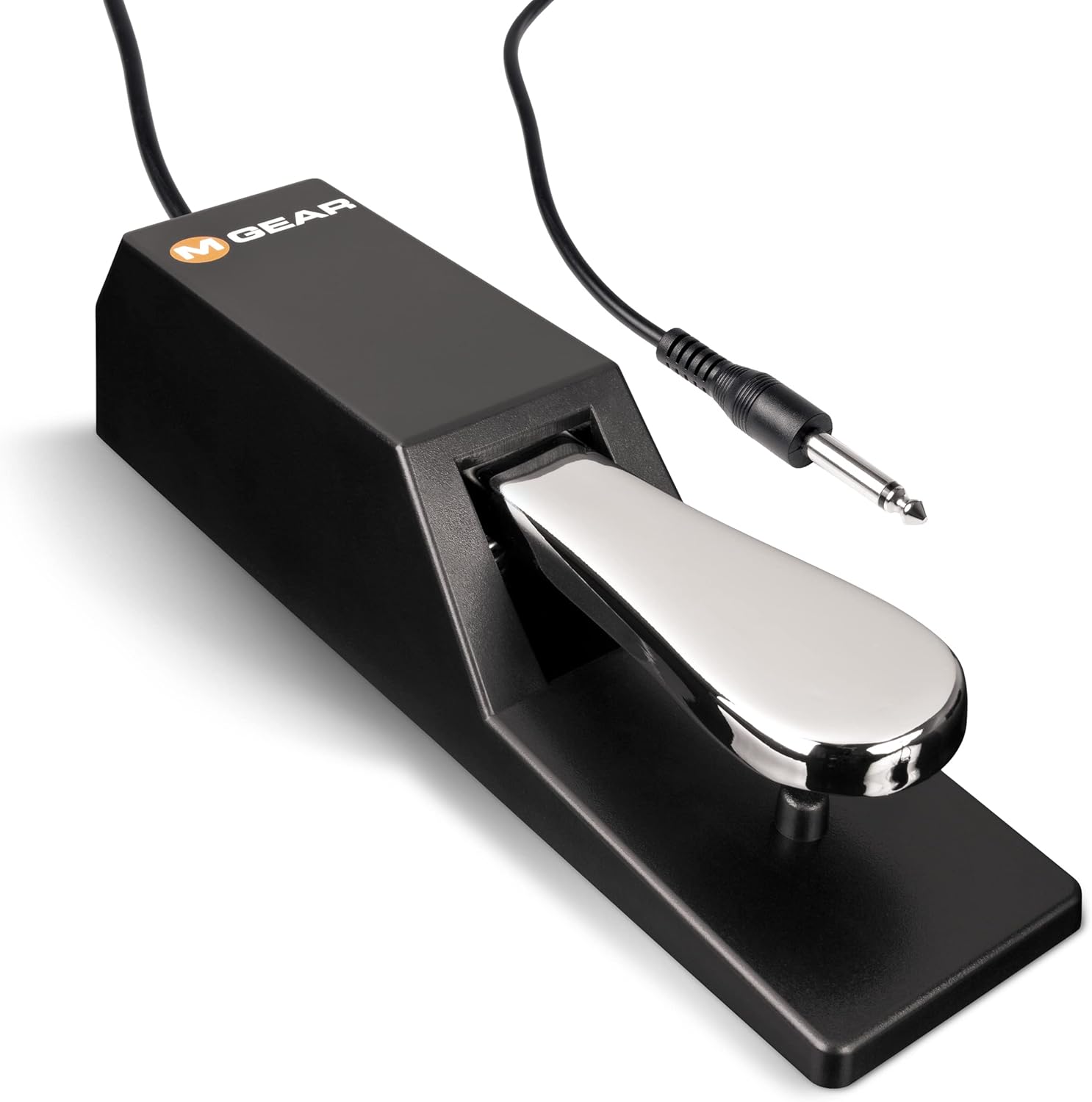
M-Audio SP-2 Sustain Pedal
The SP-2 is the standard budget recommendation for a reason — it works with virtually every digital piano and keyboard on the market thanks to its polarity switch, so you don't have to guess whether it'll register "sustain on" or "sustain off" backwards. The non-slip rubber base keeps it in place during aggressive playing, and the metal switch mechanism holds up far better than the plastic pedals bundled with entry-level keyboards.
Pros
- + Universal polarity switch — works with nearly any instrument
- + Sturdy metal construction for the price
- + Non-slip rubber base
- + The obvious first accessory to buy
Cons
- − On/off footswitch only — no half-damper (continuous) sustain
- − Cable is on the shorter side for some stand setups
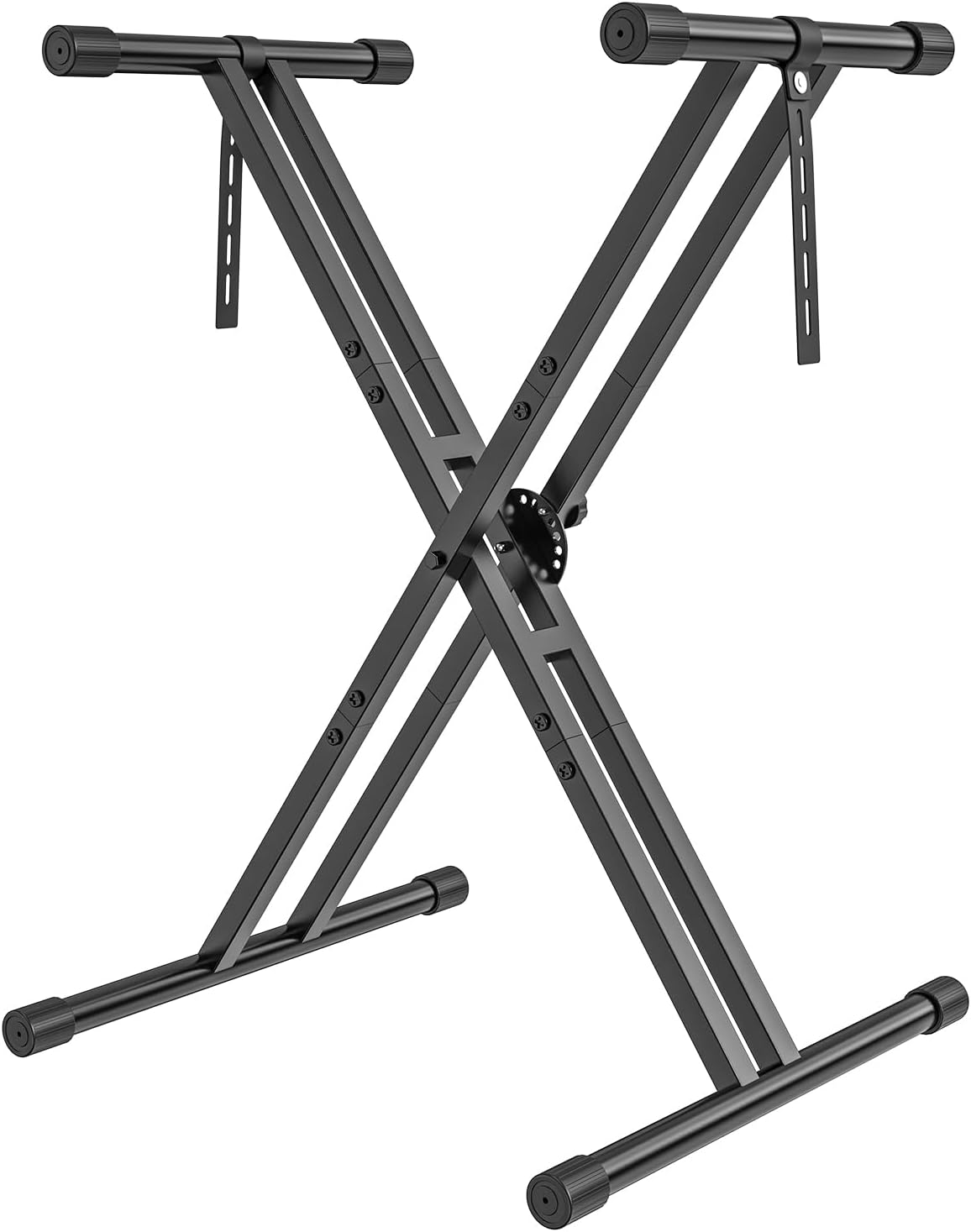
Adjustable X-Style Keyboard Stand
An X-style stand is the fastest way to get a keyboard off a table and onto something stable at the right playing height. It folds flat for storage between sessions, adjusts to fit players of different heights, and fits keyboards of nearly any width. It's not going to feel like furniture, but for the price it's the most practical option for a bedroom or apartment setup.
Pros
- + Folds flat for easy storage
- + Height-adjustable for sitting or standing
- + Fits almost any keyboard width
- + Tool-free setup in under a minute
Cons
- − Less rock-solid than a furniture-style stand for heavier 88-key pianos
- − Some wobble during very aggressive playing
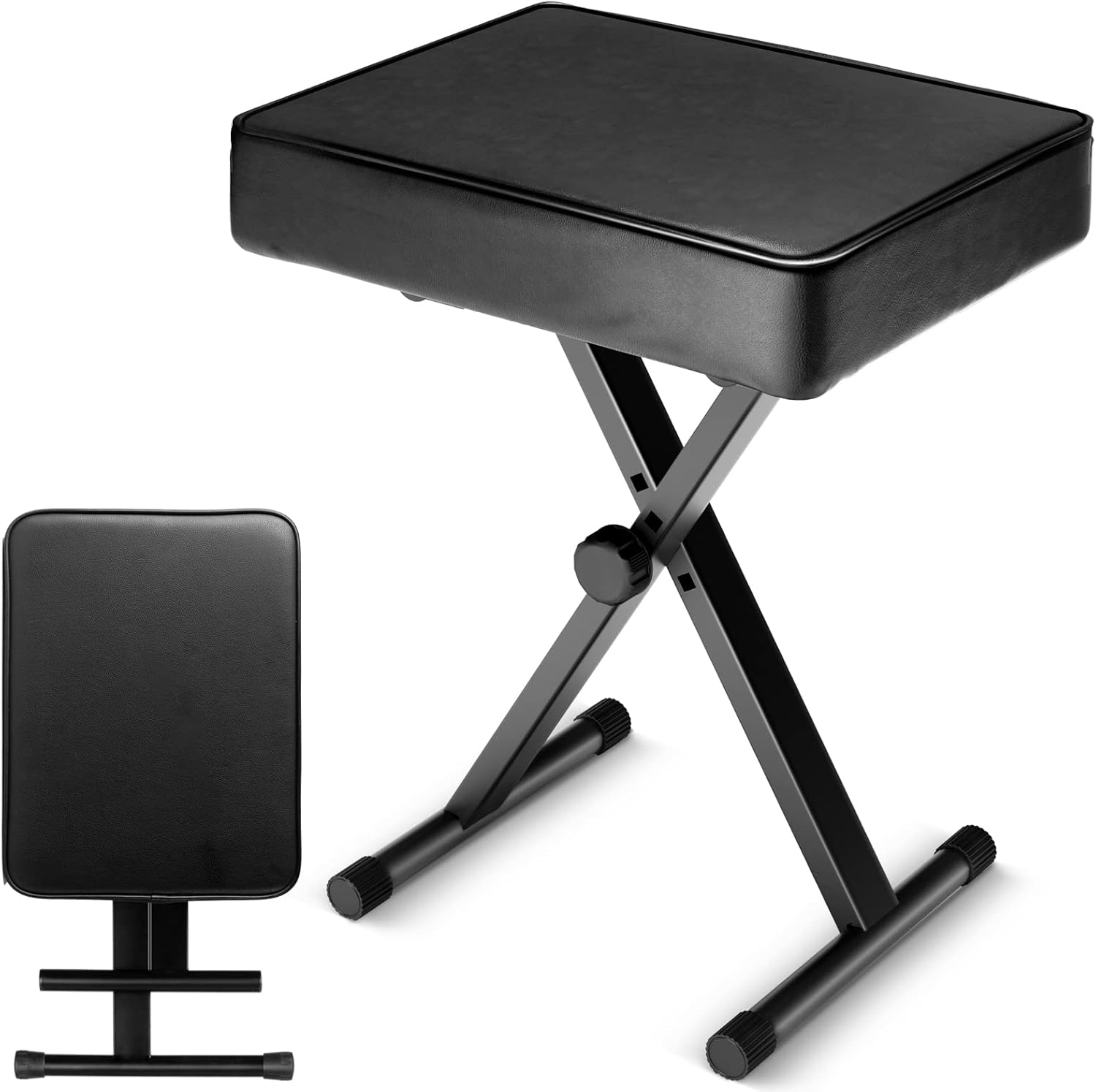
Padded Keyboard Bench
A dedicated bench keeps your seat height matched to your keyboard and stand, which a kitchen chair simply can't do consistently. The padded top makes a real difference over 30+ minute practice sessions, and most fold flat for storage — important if you're not dedicating a whole room to a piano setup.
Pros
- + Purpose-built height for keyboard playing
- + Padded top for long practice sessions
- + Folds flat, easy to store
- + Inexpensive way to fix posture problems
Cons
- − Less adjustable than a professional piano bench
- − Padding can compress over years of daily use
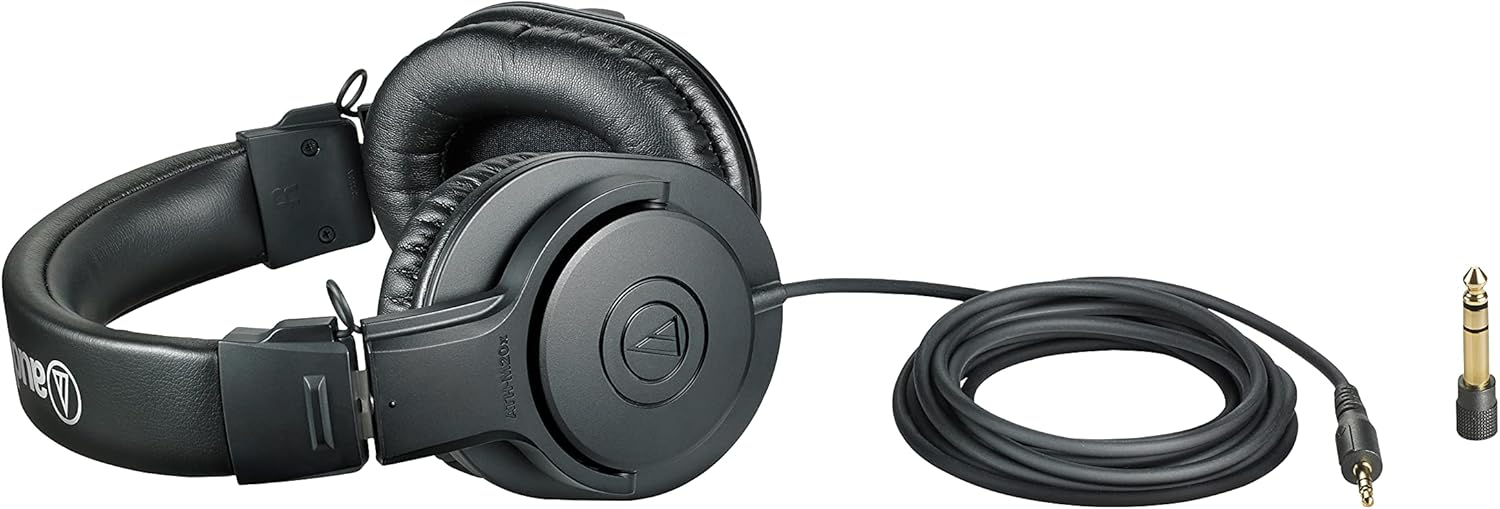
Audio-Technica ATH-M20x
The ATH-M20x is the standard recommendation for silent practice because it does the one thing that matters most — a closed-back design that blocks outside noise and keeps your playing from leaking to the rest of the house. The frequency response is flat and accurate rather than bass-boosted, which matters if you're actually listening for dynamics and touch while you practice, not just enjoying music.
Pros
- + Closed-back — blocks outside noise, doesn't leak sound
- + Accurate, uncolored sound for critical listening
- + Comfortable padding for long sessions
- + Comes with both coiled and straight cables
Cons
- − Bulkier than on-ear or true wireless headphones
- − Cable isn't detachable
Quick Comparison
| Accessory | Price | Best for |
|---|---|---|
| M-Audio SP-2 Sustain Pedal | ~$20 | Every digital piano — universal fit |
| Adjustable X-Style Stand | ~$30 | Portable setups, tight budgets |
| Padded Keyboard Bench | ~$40 | Long practice sessions, posture |
| Audio-Technica ATH-M20x | ~$50 | Silent practice, accurate monitoring |
Still Figuring Out Your Setup?
Answer a few quick questions and get a personalized keyboard recommendation — accessories are easy once you know what you're pairing them with. Free, no signup required.
Find My Keyboard →FAQ — Digital Piano Accessory Questions
Do I really need a sustain pedal?
Yes, unless you only ever play staccato exercises. Most piano technique — legato phrasing, pedaling through chord changes, sustaining notes — assumes a pedal exists. Many keyboards and portable digital pianos don't include a usable one out of the box, though some do — the Yamaha P-145's included footswitch is fine for beginner practice.
What's the difference between a keyboard stand and a bench?
A stand holds the instrument at the correct height; a bench is what you sit on. You generally need both — a stand alone still leaves you sitting on a random chair at the wrong height for proper technique.
Can I use any headphones with a digital piano?
Technically yes, through the standard 1/4-inch or 3.5mm headphone jack most digital pianos and keyboards include. Closed-back headphones are recommended over open-back or earbuds because they block outside noise and don't leak sound, which matters for accurate practice.
How much should I budget for keyboard accessories?
Plan on roughly $140 total for a sustain pedal (~$20), a stand (~$30), a bench (~$40), and headphones (~$50). All four are one-time purchases that work with almost any keyboard or digital piano you upgrade to later.
Do digital pianos come with a sustain pedal included?
Some higher-end console-style digital pianos include a built-in 3-pedal unit. Portable ("slab") digital pianos and keyboards almost always require a separate sustain pedal purchase — check the box contents before assuming one's included.
FindKeyboard.com is an AI-powered keyboard recommendation tool. This article contains affiliate links — we may earn a commission when you purchase through our links, at no extra cost to you.